Hockey History
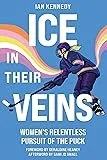
Ice in Their Veins: Women’s Relentless Pursuit of the Puck by Ian Kennedy
Best Quote: “But I’ll tell you what sport did for her. It gave her the chance to hear the shouts and cheers of the thousands; it enabled her to see her name in headlines across the very pages prepared by those who scoffed; it gave her ‘a place in the sun’ that most humans cherish and few attain.”
This book gives a detailed history of women’s hockey that goes back well over 100 years. Like other sports, women’s hockey rose and fell during the First and Second World Wars, as male hockey players deployed to Europe. More than a simple history of the game, the book further details the continued struggle for equality in women’s sports. Indeed, the success of the Women’s Team USA is due to Title IX, just as it is for soccer and other sports where women compete on the international stage. Perhaps most surprising in this book (or in a way least surprising), is how the Canadian hockey community strongly resisted opening their arms to girls and women’s hockey.
The detailed history of women in hockey goes back well over a century, and includes the Eastern Ladies Hockey League (ELHL), founded in Montreal in 1915, and of course the rise of women’s leagues in both World Wars. But much like women’s baseball in America, the end of WWII saw the end of not just professional women’s hockey for a long time, but the end of women’s sports journalism. Over the last number of decades, women’s hockey has seen the rise of new leagues and teams, culminating in today’s ever expanding PWHL.
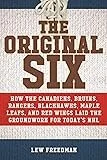
The Original Six by Lew Freedman
Best Quote: “Ballet doesn’t come close to the grace and elegance of violence as it is played within the rules—remember I said, the rules—of sports,”
Summary: This book covers the NHL and it’s six franchises from 1942 though 1967. 1942 being the year the League collapsed to six teams due to the burdens of WWII, and 1967 being the last year before the addition of six additional teams to the League. The author details the history of this time through a series of narratives, and stories centering on the major personalities such as Rocket Richard, Gordie Howe, and others within the league.
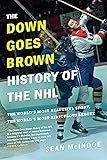
Down Goes Brown History of the NHL: The World's Most Beautiful Sport, the World's Most Ridiculous League by Sean McIndoe
Best Quote: “Pocklington’s decision was all about the cash, and if anything, the move we all know as “The Trade” should probably be referred to as “The Sale.””
Summary: A longer narrative of the NHL that dates back to 1917. The author covers the early years of the NHL, the Original Six Years, the Expansion Years, and into the modern era. The book provides an entertaining history through the use of antidotes and narrative, which is probably the best way to tell the story of any sports history. The history is more than the teams and players, as it includes labor issues between players and owners, the rivalry with the World Hockey Association (WHA), and the evolution of the game from the rough and dirty play of the 1970s, the wide open style of the 1980s, and the defensive dominance of 1990s.
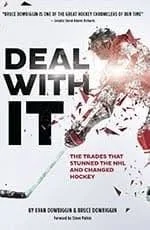
Deal With It: The Trades That Stunned the NHL & Changed Hockey by Evan Dowbiggin and Bruce Dowbiggen
Best Quote: “Mark had all the tools to deliver whatever the team needed at any time. Leadership is about stepping up and filling voids in the team’s performance, and Mark’s game was so complete, he could fill any void”
Summary: This book by the father and son authors provides a summary of the NHLs largest trades including deals that brought Phil Esposito to New York, Wayne Gretzky to L.A. Kings, Mark Messier to the Rangers, Doug Gilmore to Toronto, and Patrick Roy to the Avalanche. These trades changed the course of multiple franchises, often resulting in Stanley Cups for one side of the trade, and years of futility on the other side. The Gretzky trade to LA in particular opened up new hockey markets in the South and West of the United States, leading to the hockey at all levels as we know it today.
The Rebel League: The Short and Unruly Life of the World Hockey Association by Ed Willis
Best Quote: “Everyone says it’s the coaches who teach you the game, but it’s the players you play with and against. You learn by observing, and you learn through competition.”
A fascinating book the chronicles the World Hockey Association. The WHA came into existence during the time of alternate leagues of professional sports evidenced by the WBA, World Team Tennis, and eventually the USFL. The WHA changed the game and advanced it to a more recognizable and enjoyable game we watch today. Indeed, the WHA not only threw massive amounts of money to stars like Bobby Hull, they signed 18-year olds to contracts at a time when the NHL minimum age was 20. Thus Wayne Gretzky signing with Indianapolis and being sold to Edmonton ensured the star didn’t have to wait to turn 20 to play professionally. The WHA was also innovative in signing more Europeans who would change the face (and pace) of the game. The WHA had star players from Sweden such
The Rebel League highlights how the NHL and the broader hockey community would alienate the stars that jumped from the NHL to the WHA. Bobby Hull along with J.C. Tremblay, Cheevers, and Sanderson for example didn’t play in the 1972 Summit Series against the Soviets, as Team Canada only allowed NHL players to compete (they would get a chance in ‘76 when the WHA played the Soviets). But for all the criticism of players who jumped to the WHA for higher salaries, the result was increased pay for NHL players, as owners had to compete for talent.
The Whalers: The Rise, Fall, and Enduring Mystique of New England’s (Second) Greatest NHL Franchise by Patrick Pickens
Best Quote: “You can be tough when you’ve got tough guys around you, or you can be tough when you’re by yourself.”
Summary: A comprehensive history of the rise of the Hartford Whalers to their movement and transformation into the Carolina Hurricanes. The Whalers began their journey as one of four teams to move from the WHA to the NHL (Edmonton, Winnipeg, Quebec). The book tells the tale of how the roof of the Hartford Civic Center collapse during a snow storm, allowing the city to build a larger facility capable of hosting a NHL team. Although Hartford never achieved sustained success, they did have some winning years, and were home to a handful of superstars such as Gordie and Mark Howe, Kevin Dineen, Ron Francis, Brendan Shanahan, and Pat Verbeek,.
Rocky Hockey: The Short but Wild Ride of the NHL’s Colorado Rockies by Greg Enright
Best Quote: “They call him ‘The Magician’ because he’s managed to stay in the league for two years with only scoring seven goals”
Summary: A brief history of Colorado Rockies and their time (1976-1982) before becoming what we know today as the New Jersey Devils. The book is formatted chronologically, or season by season of the franchise from it’s beginning after the move from Kansas City (they used to be the Kansas City Scouts) to their final season in Denver. The author covers both the action on the ice, and the actions of the executives who ran the team. There are a few memorable players from this team, including Lanny McDonald, Barry Beck, Chico Resch, and Wilf Paiement. Of course, a highlight of their existence is the season where Rockies were coached by Don Cherry, following his time as head coach of the Boston Bruins. Cherry was one of seven head coaches in the Rockies six seasons of existence, while going through four separate owners. While the Rockies were not successful as a franchise, they did pave the road for the eventual move of the Québec Nordiques who would become the Colorado Avalanche.
The California Golden Seals: A Tale of White Skates, Red Ink, and One of the NHL's Most Outlandish Teams by Steve Currier
Best Quote: “It wasn’t easy being a Seals fan. Not only did the team rarely win, but it was barely noticed even when it lost.”
Summary: In 1967, the NHL doubled in size from the original six to twelve teams. San Francisco and the Bay area was selected for one of these expansion franchises. Most people remember the Seals due to their white hockey skates. In their nine year NHL running (1967-1976), the Seals were the laughing stock of the National Hockey League, often serving as a way for opposing team’s players to pad their season stats. Indeed, in their time, not once did the Seals finish with a winning record. The book goes through each season, through interviews with former players and coaches, and helps to explain the dysfunction of the team. The eccentric owner for example forced his players to wear Gold and Green uniforms with white skates (the painted leather absorbed melted ice). Moreover, the owner was cheap, and lost his best players though trades and eventually to the start-up World Hockey Association (WHA). The owner also forced upon the team wild and crazy marketing gimmicks, which included streakers. A nice touch to the book was the author providing a history of hockey in the Bay Area going back to the 1920s and their franchises in the Western Hockey League.
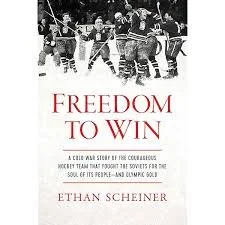
Freedom to Win: A Cold War Story of the Courageous Hockey Team That Fought the Soviets for the Soul of Its People—And Olympic Gold by Ethan Scheiner
Best Quote: “Czech coach Hlinka finished it off by simplifying the plan. “Don’t shit yourselves! It’s just hockey!””
Summary: This book goes behind the Iron Curtain to what was then Czechoslovakia during the height of the Cold War when the national hockey team came to be a symbol of the people and their anti-communist views. Indeed, following the 1968 Soviet Invasion of their country, the citizens of Czechoslovakia came to loath their Soviet counterparts and looked to hockey as a battlefield where they could get a measure of justice. There is great detail in the 1969 World Championships where the Czechoslovaks defeated the Soviets twice, leading to riots in the streets of Prague. The book also details individual players such as the Holik family, who would become naitonal figures, and whose sons would rise to play at the highest level in the NHL.
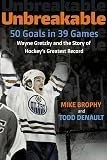
Unbreakable: 50 Goals in 39 Games: Wayne Gretzky and the Story of Hockey's Greatest Record by Mike Brophy and Todd Denault
Best Quote: “Hockey is a game of where people should be and where people are going to be.”
Summary: A game by game history of Wayne Gretzky’s historic 1981/1982 season where he would shatter Rocket Richard and Mike Bossy’s records of 50 goals in 50 games. Denault, the author of multiple books on the game of hockey, to include The Greatest Game and a biography of Jacques Plante writes a chapter for each one of the 39 games. More than a game by game accounting, the book is a terrific look into the NHL of the early 1980s, and of a young Oiler team on the cusp of their soon to be dynasty. Indeed, the book is a terrific backdrop into the deep talent pool of the Oilers, and the unique coaching style of Glen Sather that allowed for Gretzky to flourish, and accomplish this incredible milestone. A unique aspect of the book is the way the author details each scoring play, bringing the reader into each moment as #99 came closer to his goal. More amazing is the number of games #99 didn’t score, and the way he made up for it with multiple 3, 4, and 5 goal games.
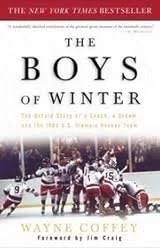
The Boys of Winter: The Untold Story of a Coach, a Dream, and the 1980 U.S. Olympic Hockey Team by Wayne Coffey
Best Quote” “Hockey is a club that holds its members tightly, the bond forged by shared hardship and mutual passion, by every trip to the pond, where your feet hurt and your face is cold and you might get a stick in the ribs or a puck in the mouth, and you still can’t wait to get back out there because you are smitten with the sound of blades scraping against ice and pucks clacking off sticks, and with the game’s speed and ever-changing geometry. It has a way of becoming the center of your life even when you’re not on the ice.”
Summary: A book about the 1980 U.S. Men's Hockey Team. The author uses the famous game as a background to provide short biographical sketches of each member of the team, jumping back and forth between the game and biographical sketches. Unfortunately, this method leads to a distortion of the timeline of the game, and of events leading up to the game. There were some neat details on a few of the players, (Jim Craig went to Norwich, my alma matta for a week), and one player clearly had OCD.
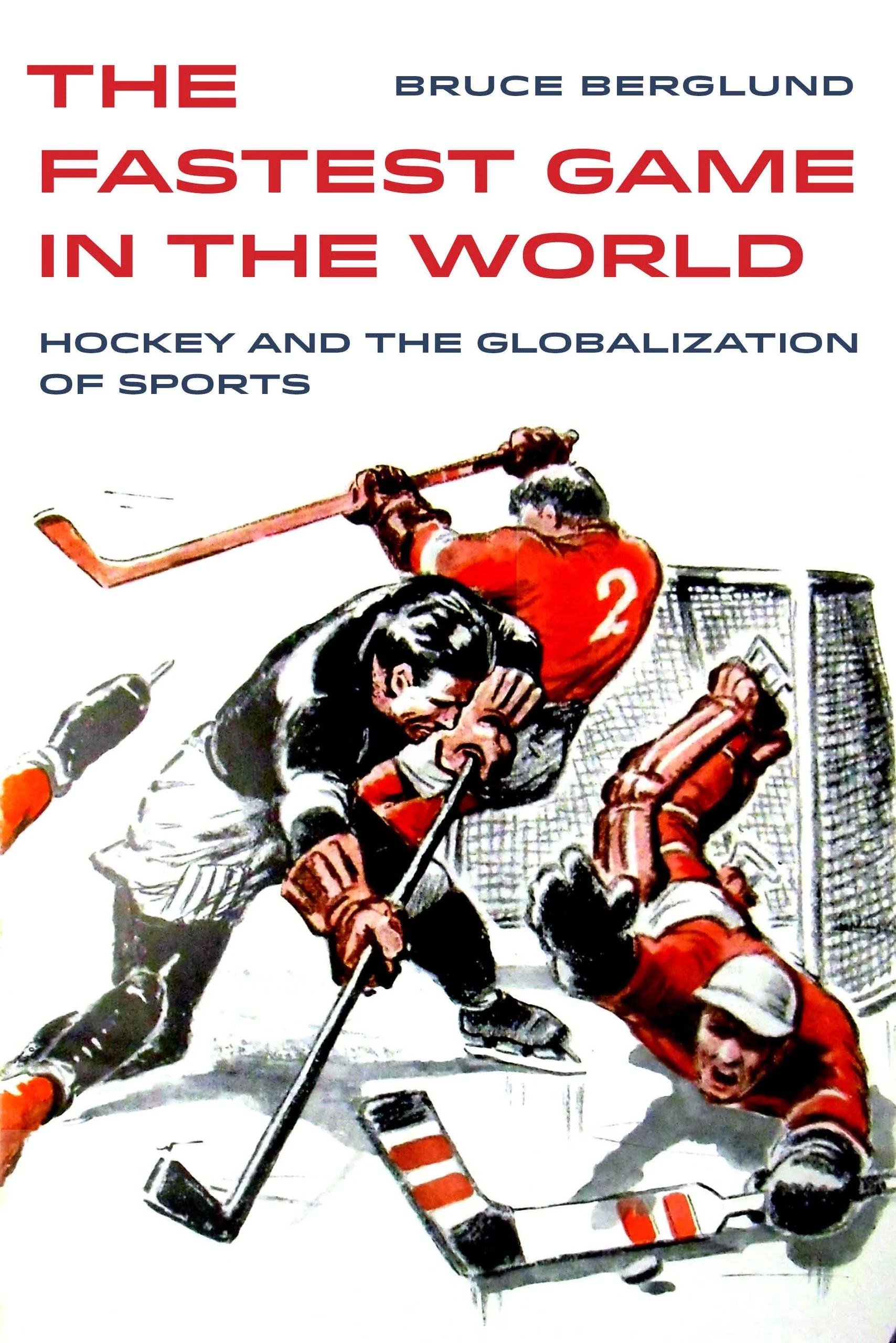
The Fastest Game in the World: Hockey and the Globalization of Sports by Bruce Berglund
Best Quote: “A winter pond was depicted on the back of the Canadian five-dollar note, along with a passage from Roch Carrier’s story “The Hockey Sweater”—“our real life was on the skating rink.””
Summary: This book uses hockey and its rich history as a backdrop to describe broader world events. Berglund describes the evolution of Soviet Hockey for example in the context of the Cold War, to include the Soviet invasion of Czechoslovakia in 1968. Further the author contrasts cultural changes in youth sports in how hockey players developed from backyard rinks to the more modern era of the Youth Sports Industrial Complex. Berglund also touches on the history and the struggles of Women’s Hockey, and how that history led to the emergence of today’s PWHL.
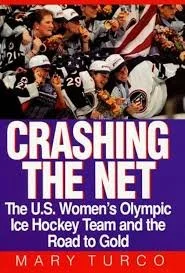
Crashing the Net: The U.S. Women's Olympic Ice Hockey Team and the Road to Gold by Mary Turco
Best Quote: "They were a family forged by shared exclusion. Every player in that locker room knew exactly what it felt like to be the only girl at the rink, and that collective memory bound them tighter than any tactical system ever could."
Summary: The author of this books spent months embedded with the U.S. Women’s National Hockey Team through training camps to the 1998 Nagano Winter Olympics and the team’s gold medal run. The general theme of this book is Tuco’s portrait of the players, and how each of them overcame adversity since their youth to achieve their dreams. Some of this adversity includes a general hostility towards girls and women playing hockey (a few had to sign up for youth leagues using a boys name), or endless searches for properly fitting equipment, with the dearth of women’s hockey gear.
The author also explores the team’s dynamics, including some divides such as the older players and the younger players, and the drama that comes with a coach the team having to select a team, meaning players that made the team had to see their close friends and former teammates get cut. A reminder that in the end, even team sports are individual sports in some manner or another.
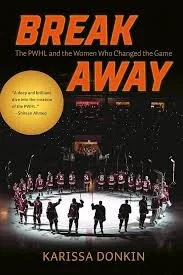
Break Away: The PWHL and the Women Who Changed the Game by Karissa Donkin
Best Quote: “"Professional sports don't run on good intentions; they run on capital, infrastructure, and television deals. The breakthrough wasn't just getting people to care about women's hockey—it was getting investors to treat it like a serious business asset."
Summary: This is story of the efforts of woman hockey players to create their own professional hockey league. The author walks the reader through the PWHL’s founding, the first draft, and the formation of teams before the first season began. More than the simple history however, the author covers the broader modern era of sports activism, including the moment when more than 200 woman acted collectively to sit out of their existing leagues. In many ways the the story of the success of the PWHL is the story of a successful labor movement.
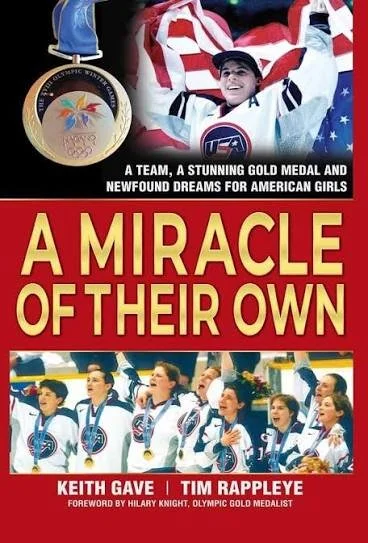
A Miracle of Their Own: A Team, A Stunning Gold Medal and Newfound Dreams for American Girls by Keith Gave
Best Quote: “Leadership isn't about being the loudest voice in the room; it's about making sure everyone around you believes that victory is not just possible, but inevitable.”
Summary: This book chronicles the 1998 U.S. Women’s Hockey Team’s journey to their Olympic Gold Medal in Nagano, Japan. The book examines the rise of the U.S. team, and how the players overcame obstacles to not only their own athletic careers, but to hostility to women’s hockey in general. Gave provides backgrounds to each member of the team to build a broader narrative of the team’s intrapersonal dynamics and internal chemistry. Indeed, the book contains powerful personal profiles, and of Cammi Granato in particular, that can serve as an inspiration to its readers. Gave also covers the intense rivalry between Team USA and Team Canada, and how the U.S. team continually fought to bring themselves to higher and higher levels of performance.
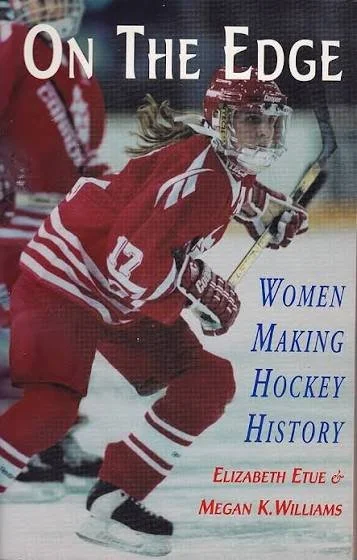
On the Edge: Women Making Hockey History by Elizabeth Etue and Megan K. Williams
Best Quote: “When she was seven, after several years of playing street hockey and shinny on outdoor rinks with neighborhood kids, [Angela] James joined a boys' hockey team. Before long she had won the high-scorer award, much to the annoyance of some teammates and a few parents. 'The boys weren't too excited about that. They loved it when we won the games, but not when they didn't win the awards.’”
Summary: This book looks at the state of women’s hockey in the mid-1990s. Published in 1996, two years before women’s hockey became an official event in the 1998 Winter Olympics, the book examines the history of women’s hockey throughout the 20th Century. It’s a troubled history, one where the women’s game virtually disappeared by the 1940s, but then experienced a rebirth in the 1970s, a rapid ascent following the ban of body-checking in the 1980s, and the first official World Championship in 1990. The authors chronicle the troubled past and the barriers women faced such as inadequate funding, resources, and poor ice-times. By 2026, the book can feel a little outdated, but it also serves as a reminder the uncertainty on the future of the sport at the time, and of how far women’s hockey has advanced over the past 30 years.
Too Many Men on the Ice: The 1978-1979 Boston Bruins and the Most Famous Penalty in Hockey History by John G. Robertson
The NHL’s Mistake by the Lake: A History of the Cleveland Barons by Gary Webster
Frozen in Time: A Minnesota North Stars History by Adam Raider
We Did Everything But Win: Former New York Rangers Remember the Emile Francis Era (1964-1976) by George Grimm
Go to the Net: Eight Goals that Changed the Game by Al Strachan
Best Quote: “The hockey world is like a village, a small community of two thousand or so people in which, to varying degrees, everyone knows everyone else…The hockey village isn’t just a place to live. It is your life. You can never get away from it.”
“Think about the way you played as a kid. Did you fantasize about scoring the winning goal in the seventh game of the Stanley Cup final, or did you dream about dropping out of the attack to make sure the opponents didn’t counter with an odd-man rush?”
Summary: Al Strachan, author of the premier biography of #99 Wayne Gretzky, took time during the 2004/05 lockout season to compose a hockey history centered around eight specific goals. These goals tell the story of the evolution of hockey over two decades from Guy Lafleur’s 1979 overtime playoff goal to Brett Hull’s 1999 Stanley Cup Final “in the crease” goal. Strachan uses each of the 8 goals as a chapter in the book to detail the changes in hockey from tactics to fitness, and the gradual rotation on the emphasis between offense and defensive focused hockey, and the constant changing of the rules to add more offense, but it more often than not countered by more effective defense.