Hockey Biographies
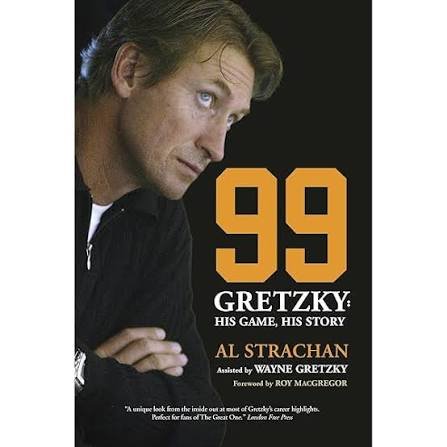
99 Gretzky: His Game, His Story by Al Strachan
Best Quote: “In the earlier stages of his career, before Gretzky became an elder statesman, opponents did not take a run at him for two reasons. One was Dave Semenko; the other was Marty McSorley”
Summary: No other sports reporter had access to the Great One like Al Strachan. His writings on #99 come from years of conversations that ranged from formal interviews to chatting it up over a couple beers. Strachan uses these conversations to paint the picture of #99s relationship to the game of hockey, and how #99 was not only the greatest player on the ice, but had more impact on the game off the ice than any other player. The modern NHL, with teams throughout North America can thank Gretzky for setting the conditions with his mind-blowing statistics and the celebrity that came with it. His move to L.A. paved the way for expansion into the American South. One of the more interesting aspects the author describes is how #99 understood from an early age the burden he would carry throughout his lifetime as an ambassador of the game. #99 never shied away from the public, and carried himself with dignity, even when he had personal confrontations with various coaches and front offices.
While the book begins with tales of hockey history, by the time #99 gets to the modern era, he is able to tell more personal stories and anecdotes, providing a unique inside perspective of the game. For example, #99 details how Al Arbor and the Islanders were able to neutralize him in the 1983 Stanley Cup Final, but then tell how Glen Sather and the Oilers were able to counter this to win the Cup and begin their dynasty in 1984. A phenomenal book to start on the road of learning hockey history.
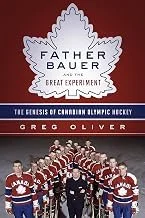
Father Bauer and the Great Experiment: The Genesis of Canadian Olympic Hockey by Greg Oliver and Jim Gregory
Best Quote: “There were many things that we wanted to do . . . and maybe part of that was Father Bauer’s idea that you can get more out of life than if you’re simply a hockey player.”
Summary: A biography of Father Bauer, the man who built Canadian National Hockey. Before NHL and other professional hockey players were allowed to compete in international tournaments including the Olympics, the Canadian National Team was led by Father Bauer. But more than a hockey coach, Father Bauer stressed hockey as a means and ways for young men to develop into a more holistic person. Bauer stressed education, spiritual development, and clean but still hard hitting hockey. Bauer’s success isn’t judged by the number of championship trophies, but rather by the lives his players went on to live when hockey was no longer central to their being.
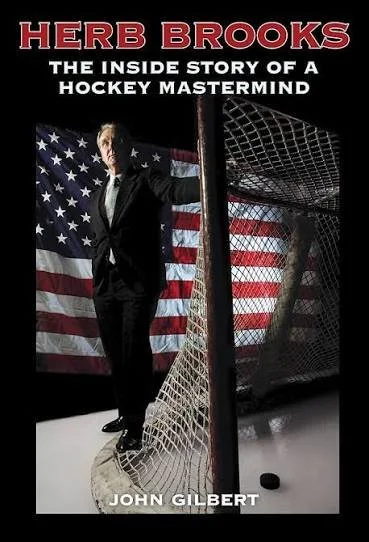
Herb Brooks: The Inside Story of a Hockey Mastermind by John Gilbert
Best Quote: “having the best play the best can accelerate the development of a small group, but it also leads to self-fulfilling prophecy in which merely identifying elite players can be mistaken for developing them.”
A nice biography of Herb Brooks, who although famous for coaching the 1980 U.S. Hockey Team to Olympic Gold was brilliant in his other coaching endeavors. Brooks turned around high school teams, the University of Minnesota Hockey Team, coached reasonably well in Europe, and had a winning record as coach of the New York Rangers (a team that played in the same Division of the NY Islanders during their dynasty years). Brooks was a leader and an innovator, and a true champion of USA Hockey
The Lives of Conn Smythe: From the Battlefield to Maple Leaf Gardens by Kelly McParland
Best Quote: “He saw the battlefield and hockey rink as symbiotic: both depended for success on shared habits and attitudes. Hockey players needed to play as a team, be constantly vigilant, but ready to attack on all fronts.”
The Conn Smythe Trophy is awarded annually to the Most Valuable Player of the NHL playoffs. This fantastic book is a biography of Conn Smythe where one can learn about his service to his nation in the military and in its national sport. During his service in the First World War, Smythe was present at four of the major battles of the war including Ypres, Vimy, the Somme, and Passchendaele. He would volunteer again in WWII, landing at Normandy (albeit not on D-Day). His WWII service was cut short when he was wounded two weeks after landing in France. On the hockey front, Smythe was paramount in the rise and development of the National Hockey League. He was the original owner of the Toronto Maple Leafs, and brought them into the modern era of hockey.
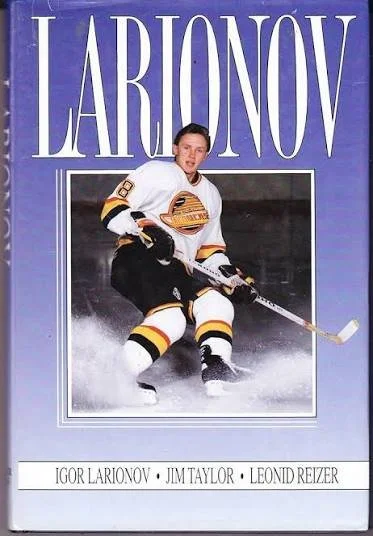
Larionov by Igor Larionov
Best Quote: “Playing as a unit means the pass is your language”
Summary: A short autobiography by one of the greatest hockey players to emerge from the Soviet Union and find his way to the NHL. The book provides some great insights into the day-to-day life of a hockey player in the Soviet Union. Larionov describes how Soviet hockey separated itself from North American hockey, while also finding room for criticism of the Soviet way. Indeed, Larionov made a name for himself through open criticism of Coach Tikhonov. Larionov tells the reader that when he left to play in North America, he wasn’t so much fleeing Soviet hockey, but rather fleeing Tikhonov himself. Moreover, Larionov describes the spartan conditions that athletes had to endure, from military style barracks to the isolation of players from their families. Winning became an expectation and not an accomplishment in the Soviet system, which had the effect of taking joy out of the game.
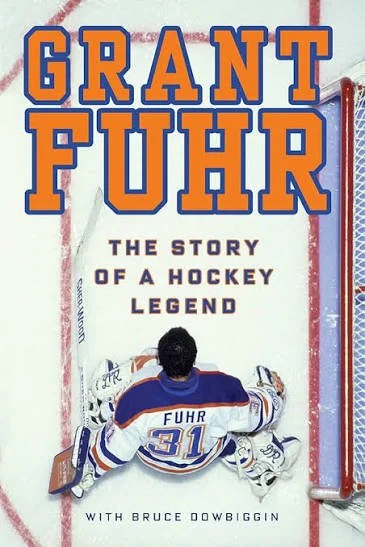
Grant Fuhr: The Story of a Hockey Legend by Grant Fuhr and Bruce Dowbiggin
Best Quote: “Winning the first championship is hard, harder the second year because everybody wants to beat the defending champions, you play 82 playoff games, then the real playoffs begin”
Summary: Grant Fuhr, the fist black goaltender in the NHL tells his story on what it was like playing goal in the NHL for one of the greatest teams ever assembled. Fuhr structures the book around ten critical games from his legendary career, but expands to include his complete life story from the time he was adopted as a young child in Alberta, through his rise in the ranks of junior hockey to his historic NHL career that included five Stanley Cups. Important throughout is understanding that Fuhr’s rise in the NHL is of historic significance, as the first black goaltender in the NHL, and first black player to have his name engraved on the Stanley Cup. The book also discusses the personal demons Fuhr battles throughout his playing career, which led to his suspension in 1990 for cocaine abuse (the suspension came after he had become clean and sober). Fuhr’s statistics don’t raise him to a level of goaltenders who came before or afterwards, but in an era of high octane offenses, Fuhr understood his assignment was to win games, and Fuhr came up big when the games meant the most.
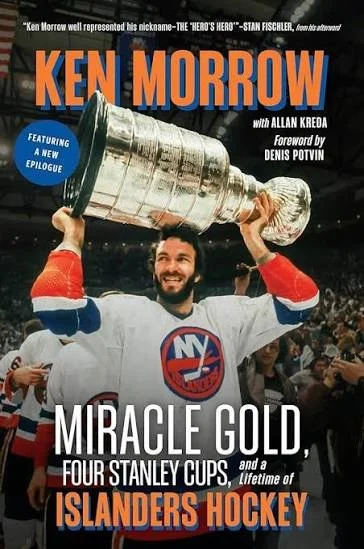
Ken Morrow: Miracle Gold, Four Stanley Cups, and Lifetime of Islanders Hockey by Ken Morrow
Best Quote: “Just because you become captain doesn’t mean you have to change. Sometimes people make the mistake of trying to change. But the reason you were chosen is the person you are. Be yourself.”
Summary: Ken Morrow is perhaps the most consistent and reliable defenseman from the 1980 U.S. Hockey team and from the 1980-1983 New York Islanders Stanley Cup Dynasty run. The title of the book comes from Kenny Morrow becoming the first player to win a Stanely Cup and Olympic Gold Medal in the same year, a feat he accomplished in his rookie season. The book walks the reader through Morrow’s childhood in Flint, Michigan to his time playing NCAA hockey at Bowling Green, through his time with the U.S. Olympic Team, and his career with the New York Islanders. Morrow’s themes are less tales of the locker room and inside gossip, and more focused on what it took to achieve his personal and team accomplishments.
Playing With Fire by Theoren Fleury
Best Quote: “I remembered being at an AA meeting in Malibu on a Sunday morning just a few months earlier. A guy with sixteen years of sobriety got up and said eight words—“You are only as sick as your secrets”—and then left the podium.”
Summary: This book is a raw but honest autobiography. More than discussing his hockey career, Theo Fleury takes the time to discuss the abuse he experienced as a youth hockey player and his battles with substance abuse over the course of his playing career. In the former, Fleury describes what Graham James did to him (and his friend and NHL player Ray Sheppard). Fleury held enormous talent, and earned his way into the NHL, winning the Stanley Cup in his rookie year in Calgary. Fleury discusses his NHL playing years, and his consistent use of alcohol and drugs during that time; strangely enough, the way he describes his substance abuse and his on ice play, he performed better when he was using. This substance abuse did have a dark side, costing the author relationships, millions of dollars, and years of absence from the league. The bright side is that Fleury was able to turn his life around, through a long and slow recovery. The book stands out as it exposed that darker side not only of professional sports, but on junior or youth hockey as well.
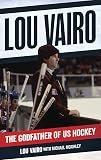
Lou Vairo: The Godfather of US Hockey by Lou Vairo and Michael McKinley
Best Quote: “I don’t want a general handyman to build my home. Why would you want a general handyman type player to build your team? I have players who are great on the attack, and I have great defensemen. So do you want to build a team of highly skilled specialists or a team of general handymen?”
Summary: An autobiography by one of the key architects of USA hockey over the past 40 years. Vairo takes the reader on a journey through his hockey career which includes trips to the Soviet Union where he befriended Anatoli Tarasov, the godfather of Soviet hockey. Vairo used this relationship to learn, and to take ideas from the Soviet system and incorporate them into his teams and organizations. This book is a course on how to learn from the best and from those who come before you, and from those around you. In addition to Tarasov, Vairo took many lessons from Coach Fred Shero, the man who himself studied Soviet hockey and guided the Flyers to consecutive Stanley Cups in the 1970s.
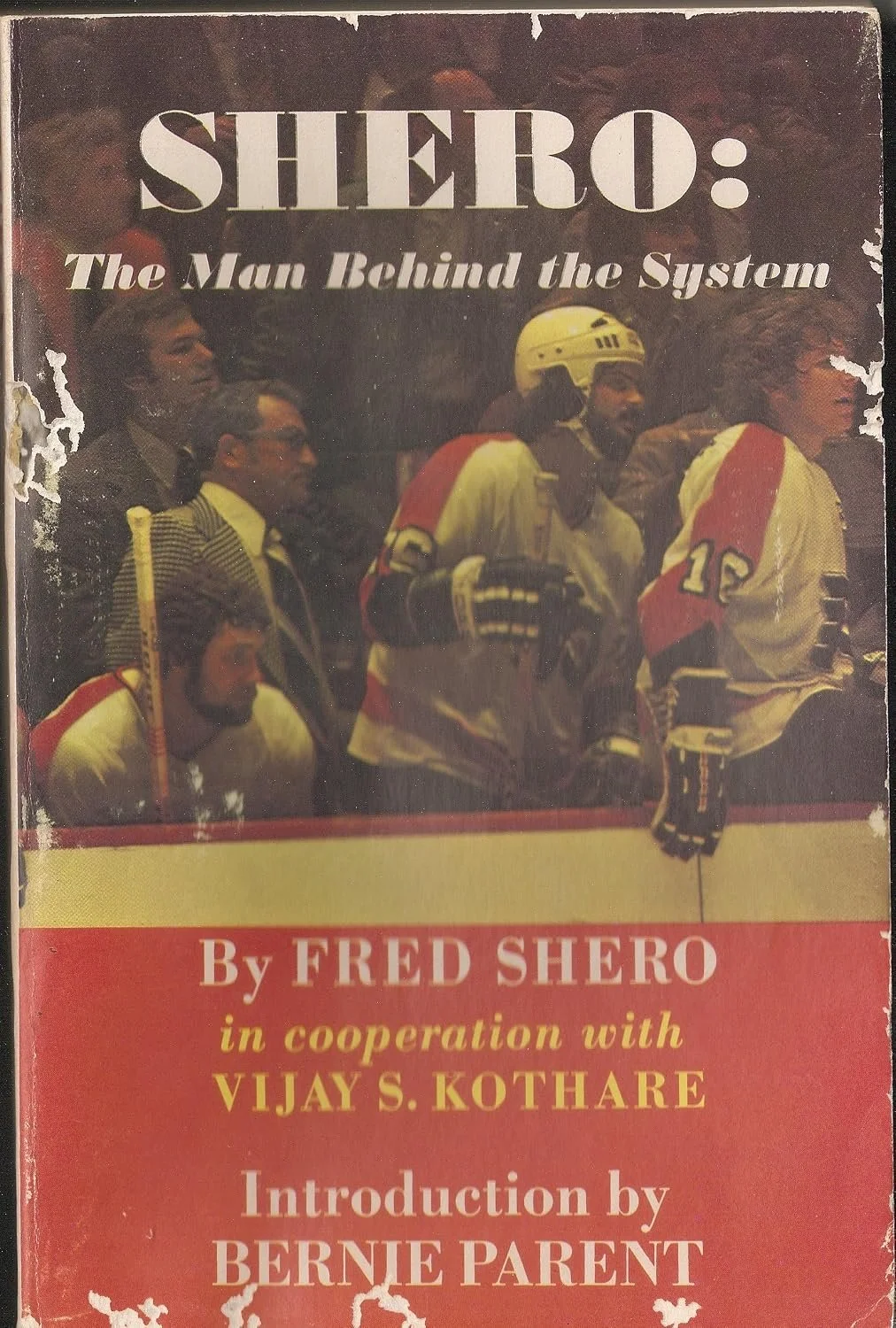
Shero: The Man Behind the System by Fred Shero
Best Quote: “Sports has to be fun, even at the professional level, life as an athlete is brief, if you can't have fun while playing the sport, what good is it?”
Summary: A short book where Fred Shero, the architect of the tow-time Stanley Cup Champion, 1970s Flyers. Where about half the book focuses on his childhood and upbringing, Shero does share with the reader his experiences learning the game of hockey, in particular his trips to the Soviet Union and long discussions with Anatoli Tarasov. Shero’s passion for the game of hockey is clear through his writing, as is his ability to learn about the game from multiple angles, including international coaching styles, which were generally looked down upon in North America at the time. The book was published in 1975, just as the Flyers completed their back-to-back championship runs, thus the book can feel incomplete (no mention of the famous 1976 Super Series game against the Soviets, and nothing on his time as head coach of the New York Rangers).
Earned by Chris Pronger
Best Quote: “That’s when it clicked. These guys weren’t gods. They were human. Better than me, sure. More experienced, absolutely. But the gap? It wasn’t the Grand Canyon I’d built up in my head. It was jumpable.”
Summary: Hall of Fame Defenseman Chris Pronger tells his story from the time he was a junior to his culmination in winning a Stanley Cup and entering the Hockey Hall of Fame. Pronger describes how he gained confidence as a player, how he made commitments to himself in how he would prepare his mind and body for competition at the highest levels.
Perhaps the best insight in this book is Pronger’s realization that everyone must have standards distinct from preferences. To be the best, to win, are goals, but standards are a way of living that you don’t sacrifice for immediate satisfaction.
All Roads Home: A Life On and Off the Ice by Brian Trottier
Best Quote: “You can always come home.” -Brian Trottier’s Father
Summary: Brian Trottier is perhaps one of the more underrated great players of his time. He is recognized as a Hall of Fame Player (inducted in 1997), one who earned six Stanley Cup Rings as a player, played in seven finals, and earned another ring as an assistant coach. During his time as an Islander, he earned the Calder, Art Ross, Conn Smythe, and King Clancey trophies. After retiring following his stint with the Penguins, he totaled 1,425 career points. His autobiography shares with the reader his time growing up in rural Saskatchewan, the value he places on family, and what he learned that led him to the hockey career he experienced. Trottier describes some of the relationships he built over the years through hockey, particularly his relationship with Tiger Williams, a fellow player who helped keep Trottier’s rising career on track.
Home and Away by Mats Sundin
Best Quote: “Unlucky bounces happen in hockey all the time. A good team needs to control the game so that the unlucky bounces don’t decide your fate for you.”
Summary: This book spans the life and career of Mats Sundin, from his childhood growing up in Sweden to his career in the NHL, most of which was spent as a member and captain of the Toronto Maple Leafs. Sundin would be the first overall draft pick in 1989, and as such he was the first European picked at #1. He began his career with the Quebec Nordiques, and would later spend 13 years with the Leafs, 11 as the captain following the departure of Wendall Clark. Throughout his book, Sundin describes some famous personalities he came across to include Ed Belfour, Alexander Mogilny, Curtis Joseph, Gary Roberts, and famous fighter Tie Domi. Sundin further tells us about his relationship with coaches Pat Burns and Pat Quinn.
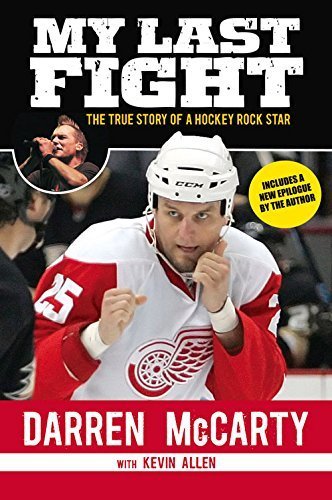
My Last Fight: The True Story of a Hockey Rock Star by Darren McCarty
Best Quote: “I have faith that my life will eventually work out, as long as I continue to fight against my addiction. I know I can't give in because this disease has fatal consequences. That's why this is my last fight, and why it's the most important fight I have ever had.”
Summary: The book chronicles Darren McCarty’s 15-year NHL career as a member of the famous “Grind Line” of the Detroit Red Wings. The book, while discussing memorable moments such has his revenge against Claude Lemieux and his Stanley Cup clinching goal in 1997, focuses more on his struggles and battles off the ice. These include battles with alcoholism, substance abuse, multi-million dollar bankruptcy, toxic divorces, and the devastating death of his father. It’s an honest book where McCarty takes responsibility for the choices he made, and provides a nice look behind the scenes of the 1990s and 2000s Red Wings.
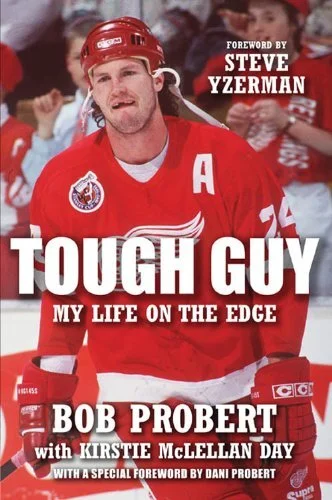
Tough Guy: My Life on the Edge by Bob Probert with Kirstie McLellan Day
Best Quote: "Don't cry, be tough."
Summary: This book, co-authored by the writer who contributed to Theo Fleury’s Playing With Fire is a deep dive into the life of one of the more feared fighters ever to skate in the NHL. The book was released in 2010, shortly after Bob Probert’s unexpected death. The book looks at the personal life of Probert, one in which he suffered with drug and alcohol addiction, while simultaneously covering his beloved career on the ice. The book does not shy away from the brutal realities that NHL enforcers lived with, nor does it shy away from Probert’s troubled personal and legal issues (arrested and sentenced to federal for transporting drugs across the U.S. - Canadian Border). The life of Bob Probert comes off as tragic, yet complex, and offers the reader a greater understanding of life in the league.
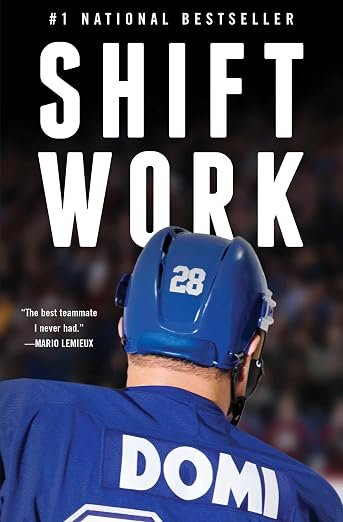
Shift Work by Tie Domi
Best Quote: “Playing other sports—and believe me, I played every sport I could—made me a better hockey player.”
Summary: Tie Domi, one of the premier fighters ever to skate in the National Hockey League takes the reader from his childhood hockey playing days through his time skating for multiple teams in the NHL. Naturally, Domi discusses the famous fights and incidents during his career, including his epic boughts with heavyweights such as Bob Probert. However, more than a tale of his fights, Domi takes the time to discuss some of his favorite teammates and coaches. Indeed, Domi’s reverence for the leadership of Mark Messier, and the skills of Mats Sundin are made quite clear. Domi further provides insights into what motivated NHL players, and takes to the time to detail what made coaches such as Pat Burns and Pat Quinn so respected and successful.
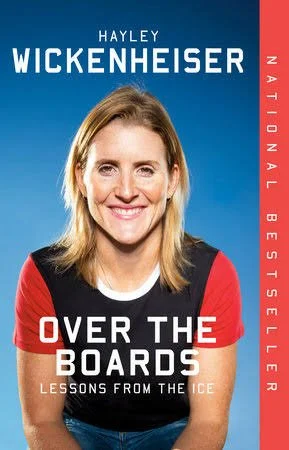
Over the Boards: Lessons from the Ice by Hayley Wickenheiser
Best Quote: “"I didn't want to be the best girl on the ice. I just wanted to be the best player on the ice, period.”
Summary: Written by someone who is often considered the best woman to ever play hockey. Wickenheiser tells her story from her youth spent in skating in a backyard rink in Saskatchewan and dressing in boiler rooms due to the dearth of women’s locker rooms at local rinks and her capture of multiple Olympic Gold Medals, and her transition into a medical career. These experiences, along with the challenge of playing in men’s professional leagues provided Wickenheiser physical and mental strength to rise to the top of the Women’s Hockey World. Within the book, Haley provides a handbook of sorts to achieve success. She discusses the value of failing, as her and her team did in the 1998 Olympics, and how that failure can teach lessons about one’s self. Haley then talks about her leadership role on Team Canada, and what she needed to do to push her teammates to higher levels of performance. Finally, as she transitions to a life in medicine, she discusses the parallels between sports and medicine. Example of the latter include rapid decision making under pressure, and the necessity for emotional control in critical moments.
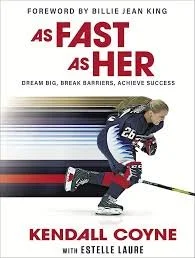
As Fast As Her: Dream Big, Break Barriers, Achieve Success by Kendall Coyne
Best Quote: "People love to tell you what you can’t do based on what they can see. They saw my height, but they couldn't see my motor, my work ethic, or my speed. Never let someone else’s tape measure define your potential."
Summary: The fastest woman to ever lace up a pair of hockey skates uses her performance in the 2019 NHL All-Star Skills Competition as a backdrop to tell her life story. The book is motivational, and Coyne uses her stature (5’2”) as a way to document her ability to overcome adversity. She was able to use what is perceived as a weakness as a strength, leading to a hockey career where she dominated the college ranks, and earned an Olympic Gold Medal at PyeongChang in 2018. The structure of the book lends itself more towards young readers looking for inspiration from a generational athlete, with the ultimate lesson that one must capitalize on the opportunities one is given.
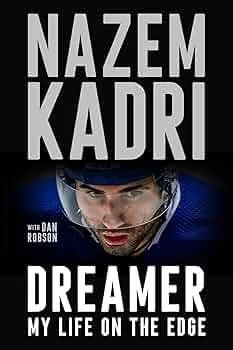
Dreamer: My Life on the Edge by Nazem Kadri
Best Quote: “People try to tell you to leave culture and religion at the door, but it’s part of who you are. Being the first Muslim player to win the Stanley Cup wasn't just a personal achievement—it was a message to kids everywhere that they belong in this game, too.”
Summary: Nazem Kadri, the first Muslim and Arab player to have his name engraved on the Stanley Cup (2022 Colorado Avalanche) offers a biography that looks at the intersection of hockey, cultural identity, and perseverance. Kadri was born and raised in London, Ontario, as the grandson of Lebanese immigrants. As such, he was subject to overt and subtle racism throughout his life and hockey career. In the latter aspect, Kadri’s book is not kind to the culture that can exist in hockey rinks and locker rooms. Kadri spent a decade playing for the Toronto Maple Leafs after being drafted 7th overall in 2009. In that decade he played for Mike Babcock, and Kadri details the toxic environment Babcock created for the team. Kadri then discusses how his career flipped upon his arrival in Colorado, and culminates with the 2022 Stanley Cup run. This is an honest book that gives a unique perspective.
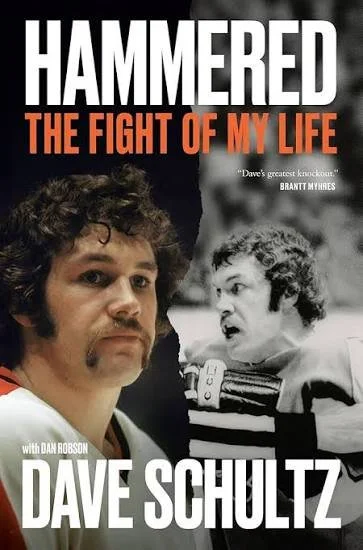
Hammered: The Fight of My Life by Dave Schultz
Best Quote: “Rehabilitation was the first real fight I ever had to win for myself."
Summary: Before Bob Probert and Tie Domi, before Toni Twist, Dave Semenko and Marty McSorly, there was Dave Shultz, the feared enforced of the 1970s “Broad Street Bullies” Philadelphia Flyers. This book, written decades following Schultz’s retirement, also serves as a way to make up for his initial memoir (The Hammer) where he burned multiple relationships with his former teammates. Indeed, this book attempts to paint his life a career in a new light, and represent himself as a caring and kind person off the ice, opposed to a thuggish character he played on the ice. Like many of the hockey enforcer biographies, Shultz details his substance abuse battles and discusses the time he spent in rehab. Moreover, the book takes the time to cover his recovery but also provides some behind-the-scenes details of the 1974 and 1975 Stanley Cup championships he was a part of. This is a book of a deeply flawed person trying to make peace with the world.
Finding Murph by Rick Westhead
Best Quote: “Everybody’s somebody.”
Summary: Rick Westhead wrote the “Concussion Book” for hockey. The book follows the life and career of Joe Murphy, a former first overall pick in the NHL draft and a Stanley Cup Champion with the 1990 Edmonton Oilers. The story Westhead tells however is not one of triumph, but rather one of tragedy. Indeed Joe Murphy rapidly went from a multi-millionaire to an unemployed and homeless, living on the streets. Murphy’s decline is largely attributed to a series of concussion and head trauma he received over his lifetime playing high level hockey including 16 years in the NHL. The book looks beyond Murphy, using his story to highlight the links between repetitive concussions and Chronic Traumatic Encephalopathy (CTE). Westhead is effective in creating sympathy for Murphy while indicting the NHL for creating a culture that is resistant to fully acknowledging the danger and long-term risks of concussions. The book is revealing, and a must read to understand the culture of hockey, and the risks within the game.
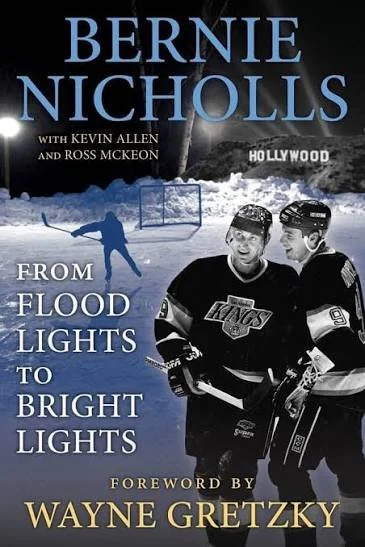
Bernie Nicholls: From Flood Lights to Bright Lights by Bernie Nicholls and Ross McKeon
Best Quote: “Darryl couldn’t teach us how to make it work. He knew the game, but power play often relies on offensive instincts. A coach can draw up 50 plays. But what works best is when players read what’s happening on the ice, sense who is going where, and then react accordingly.”
Summary: A unique conversational autobiography by one of the eight humans to have scored 70 or more goals in a single NHL season (Gretzky, Lemieux, Kurri, Esposito, Mogilny, Hull, Selänne) and one of only six to score 150 or more points in a single season (Gretzky, Lemieux, Yzerman, Esposito, McDavid). The book takes a fun look at life as a professional hockey player, and is more focused on tales of the game, or various stories about the players and personalities Nicholls encountered throughout his career. There are parts that get serious, such as his discussion on the time his young son, born with Down Syndrome, had a stroke while Bernie was 3000 miles away from home. In this sense, the book speaks to the life choices professional athletes must take, and the sacrifices their family members experience.
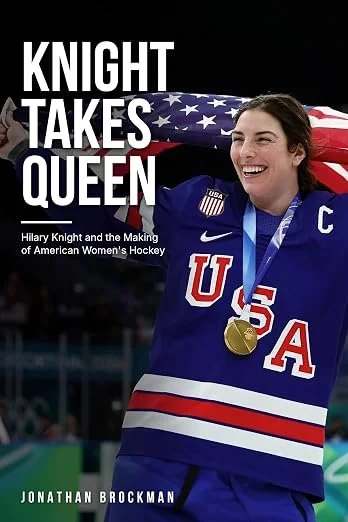
Knight Takes Queen: Hilary Knight and the Making of American Women's Hockey by Jonathan Brockman
Best Quote: "Hilary didn't just want to fit into the existing framework of women's hockey—she wanted to blow the walls out. From the moment she stepped onto the ice, her goal was to prove that women's hockey wasn't a novelty act; it was high-stakes, elite athletics."
Summary:
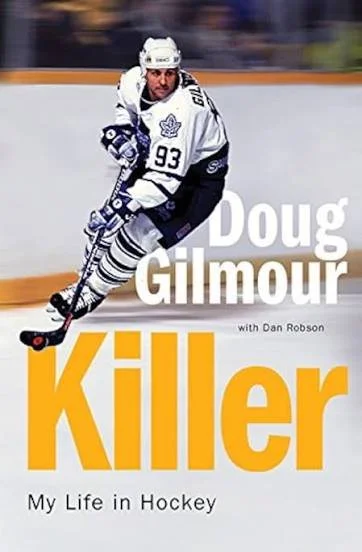
Killer: My Life in Hockey by Doug Gilmore
Best Quote: “When you play on a team, you can’t have any kind of success by yourself. Everybody on the team is trying to succeed. And the more you work together, the more success you’ll have. If you’re a selfish player, everybody reads that.”
Summary: A book that reveals the intensity and passion of one of the best leaders to ever play the game. The book carries the reader through Gilmore’s career, from his early days winning a Stanley Cup with the Calgary Flames through his trade and decade plus run with the Toronto Maple Leafs. With the Leafs, Gilmore led the team to game-7 of the Conference Finals, only to lose to Wayne Gretzky’s Los Angeles Kings, largely due to a missed high-stick in game-6 of the series. In addition to his commentary of various games, Gilmore discusses his relationships with various coaches such as Pat Burns, Jacques Demers, and Jacques Martin. As open and honest as the book is, Gilmore does leave out his short time with the St. Louis Blues, and any personal explanation for the events back in 1988.
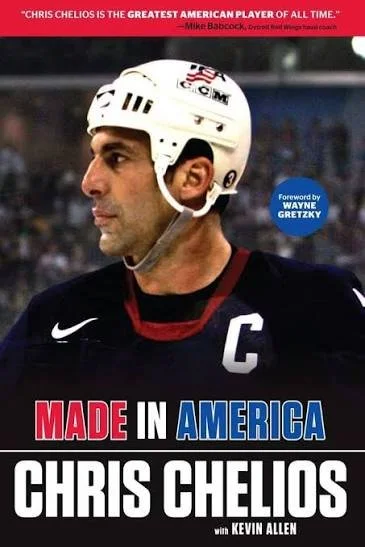
Made in America by Chris Chelios
Best Quote: “To me, slashing someone’s hand or breaking someone’s fingers was nothing. It was part of the game. Broken hands heal. Fingers heal. The pain that comes from losing does not.”
Summary: Chris Chelios enjoyed what could be the longest and most physical career in the National Hockey League. Over the course of 26 years in the League, Chelios earned three Stanley Cups, three Norris Trophies, and skated in four Olympics for Team USA. In the book, Chelios tells the story of his unconventional path towards the NHL, from growing up in San Diego to playing Junior B and eventually earning a spot at the University of Wisconsin and the on the 1984 U.S. Olympic Team. Chelios then describes his time as a Montreal Canadian, where he earned his first championship rink in 1986, then then served as captain of the Chicago Blackhawks, and eventually with the Detroit Red Wings where he earned two more Cup Rings in 2002 and 2008. Chelios writes about his successes and failures, but also describes how his hard work and intense physical training led to his long-term success. He doesn’t shy away from the 1998 Nagano Olympic hotel incident (Chelios was team captain), nor does he hide his personal feelings towards Mike Keenan or Gary Bettman. If you appreciate the way hockey was played in the 1980s and 1990s, this book should be on your hockey bookshelf.
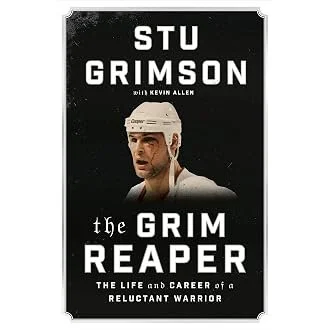
The Grim Reaper: The Life and Career of a Reluctant Warrior by Stu Grimson
Best Quote: “
Summary:
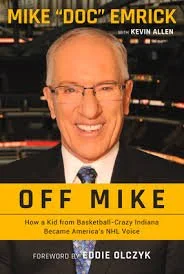
Off Mike: How a Kid from Basketball-Crazy Indiana Became America's NHL Voice by Mike Emrick
Best Quote: “I told stories, because that’s what you should do when you are honoring the memory of someone who knew how to fully explore his life.”
Summary: Mike “Doc Emrick” spent 47 years in the broadcasting business, and in many ways became the heir to Foster Hewitt as the voice of the National Hockey League. In the book, Emrick provides the reader a detailed synopsis of his broadcasting career from his youth through his retirement. The book is also a collection of some terrific stories and anecdotes that shaped his life. What’s eye opening is that his broadcasting journey mirrors that of a professional hockey player, in that he started in the minor leagues, putting in time to develop his craft before entering the big leagues. His career then lifted off, as he would interact with the greatest players and coaches in the NHL, as he would call 22 Stanley Cup Finals and 6 Olympics. The book’s prose is terrific, as Doc Emrick understands the value of selecting the right word to describe any situation, and 47 years as an announcer elevates him to a master story teller. This is a book about the rewards of hard work, dedication, and value of waking up in the morning and doing what you love to do. Having heard his voice over the decades calling NHL games, it’s hard not to read the book with Doc’s voice inside your head.
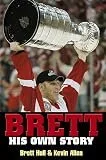
Brett, His Own Story by Brett Hull
Best Quote: “
Summary: