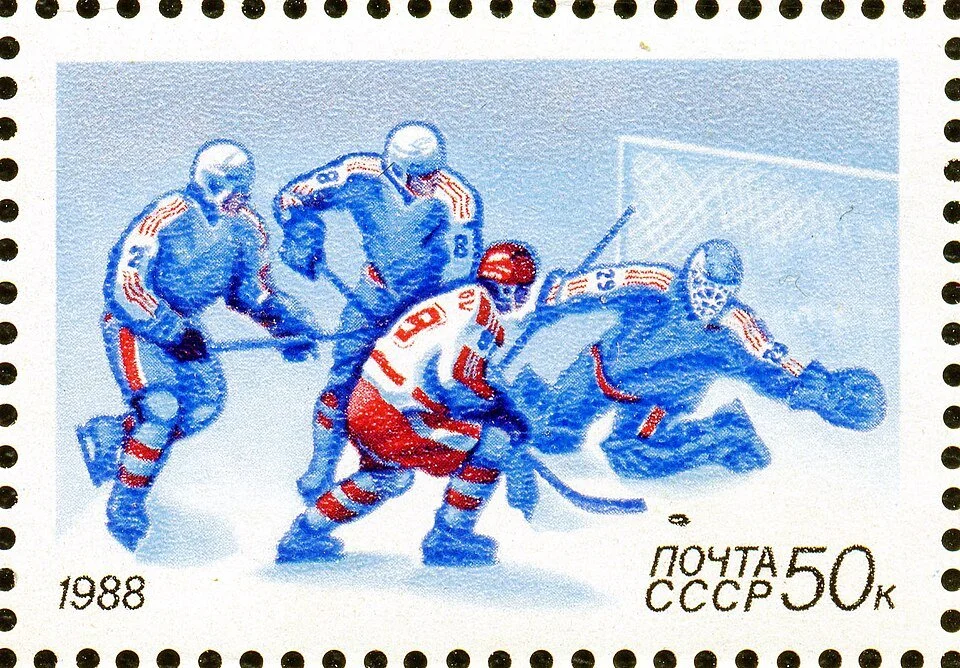
How to Win at the Olympics: Road to Olympus by Anatoli Tarasov
Best Quote: “Passes come from the heart.”
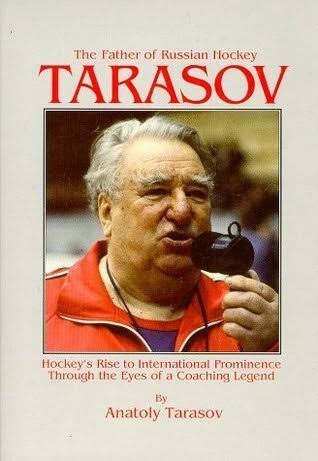
Tarasov: The Father of Russian Hockey: Hockey's Rise to International Prominence Through the Eyes of a Coaching Legend by Anatoli Tarasov
Best Quote: “Sport requires persistence, the ability to value time and compress it. The youth is given only once”
Summary: This book is a must read for anyone who seeks to coach hockey at any level of the game. The book is a passionate retelling of Tarasov’s life (his last book before his death in 1995) and perspective of the game of hockey, but also what is important for coaches to consider when molding a team. Tarasov tells the story of the evolution of the Russian game, contrasting and comparing it with the Canadian or North American style of hockey. Tarasov’s writing is a fierce advocacy for passing, conditioning, and creative stickhandling over individual play. Tarasov tells the backstory of how some of the greatest Soviet players such as Tretiak and Kharlamov developed and attainted their success. Perhaps the best aspect of this book is Tarasov’s conclusions on how coaches should treat players and coach the game.
Path to the Summit Volumes I & II by Jim Genac
Best Quote: “The propensity of Soviet-made sticks to break easily was forcing them to overcompensate by passing until the puck until it could be tipped into the net.”
Volume I Summary: Volume I covers the history of Soviet Hockey from 1946 - 1956, where Jim Genac examines how the Soviets built their hockey program from one with no hockey or on-ice tradition into a global hockey superpower in about a decade. Genac looks beyond the genious of Anatoli Tarasov and looks to how the Soviets adapted their style from bandy (field hockey on an soccer sized ice surface). Moreover, Genac explores how the Soviet government backed the rise of the sport, providing essential resources to players and coaches. Genac further identifies the influence of Lloyd Percival and his writings, which were often dismissed by Canadian hockey officials but embraced by the Soviets. The book is a comprehensive work, and breaks down the mythology of a singular genius being responsible for Soviet Hockey success.
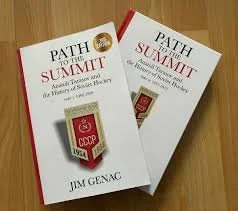
Volume II Summary: In volume II, Genac covers the time period of 1957 - 1972. Spanning the fifteen years of Soviet dominance in international hockey, the book traces how Anatoli Tarasov transformed Soviet hockey, specifically CSKA Moscow and the Soviet National Team into an unsurpassed powerhouse. The book culminates with the 1972 Summit Series, which occurred shortly after Tarasov was relieved of his coaching duties. Much like volume I, Genac’s book is composed of deep research, and provides details on Soviet hockey you won’t find anywhere else.
Volume II focuses on the innovations of Tarasov, the behind the scenes political drama of Soviet hockey, and the mental anguish that was imposed on elite athletes playing behind the Iron Curtain. Genac describes the living and training conditions of the Soviet team under Tarasov, conditions that led to nine World Championships and three Olympic Gold Medals. This success came at a cost however, as Tarasov’s innovative coaching style was at odds against Soviet sports bureaucrats—such as Sergei Pavlov and Andrei Starovoitov.
The tragedy of course is that Tarasov was relieved of his coaching duties just prior to the Summit Series, and he was denied his lifelong dream of coaching against NHL professionals. The book is a fantastic case study of innovation, and creativity, and how they can run into rigid bureaucracy and authoritarianism.
The Red Machine: The Soviet Quest to Dominate Canada’s Game by Lawrence Martin
Best Quote: “as long as your team has possession of the puck your opponents can’t score and you can – so, don’t give it away by making wild, unhurried plays.”
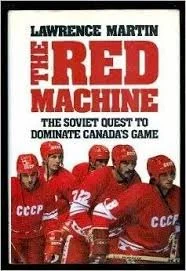
Summary: A fantastic book that takes us through the rise of Soviet Hockey through it’s peak in the late 1980s. The author provides insights into both the tactical prowess of Soviet Hockey and the failings of it’s teams at some of the most crucial moments. Martin details how famous Soviet Coach Anatoli Tarasov created his unique brand of hockey by using ideas and concepts from bandy, a sport popular in the former Soviet Union. The author is also quick to point out that Tarasov did read authors such as Lloyd Percival, to help understand how to build a hockey team.
Martin’s insights into the human cost of building the Soviet Hockey Machine are profound as well. Players were treated like cogs in this machine, training 11 months out of the year and sacrificing their personal lives for hockey. This led to a team that suffered a dearth of passion, a critical emotion sometimes necessary to win critical games, or to perform at a higher level at key moments. The failures from the 1972 Summit Series, the 1980 Olympics, and various Canada Cups reflect teams that could not use emotion and passion, while their opponents found another level to play at.
Although only available in used copies, this book is a must for anyone interested in the history of Soviet Hockey.
The Greatest Game: The Montreal Canadians, the Red Army, and the Night that Saved Hockey by Todd Denault
Best Quote: “My favorite position was being on the team”
Summary: Lawrence Martin’s book described above followed the broad track of Soviet Hockey, Todd Denault’s The Greatest Game focuses on a singular night that changed the course of hockey in North America. On New Year’s Eve, 1975, The Russian Red Army Hockey Team and the Montreal Canadians played an exhibition game to a 3-3 tie. The pure skill involved in this game led many at the time to refer to the game as the greatest ever played.
The author begins by painting a picture of professional hockey in the mid-1970s, one that was dominated by the Broad Street Bullies, AKA, the Philadelphia Flyers. Hockey was violent and brutal, characterized by intimidation, fighting including bench clearing brawls.
Todd Denault does a terrific job of detailing the game play, discussing shift by shift how the game played out. This allows for the emergence of heroes within the story such as Soviet goaltender Vladislav Tretiak who turned aside nealry 40 shots, and Scotty Bowman, the Canadian’s coach who matched lines against the Soviets.
The author takes time time to discuss the evolution of Soviet Hockey while also describing the evolution of the Montreal Canadians, and how they were able to build perhaps the greatest hockey franchise, one that would win five Stanley Cups in the 1970s, to include a remarkable four strait titles from 1976-1979. The insights into personalities of Ken Dryden, Scotty Bowman, Bob Gainey, and others.
The Game That Saved the NHL: The Broad Street Bullies, the Soviet Red Machine, and Super Series by Ed Gruver and Joe Watson
Best Quotes: “Tarasov once outlined the key components of the game, the three speeds of hockey—the speed of moving, the speed of reflexes, and the speed of thinking”….”The Red Army didn’t want to battle the Bullies physically in the corners. “And that’s where games are decided,”
Summary: This book covers the the final game of the Super Series 76’ games between the Philiadelphia Flyers and the Soviet Red Army. More than just a summary of the game, the authors provide unique insights on the players and personalities involved. Ranging from Fred Shero, coach of the two-time defending Stanly Cup Champion Flyers along with Bobby Clarke, Dave Shultz, Valeri Kharlamov, Boris Mikhailov, and Vladislov Tretiak. In addition to short biographies, the authors provide analysis of the Soviet hockey system of the 1970s, then go on to describe how Shero studied the Soviet way of hockey to develop ways to beat them. This book is a remarkable companion to Todd Denault’s The Greatest Game.
From Behind the Red Line: An American Hockey Player in Russia by Todd Hartje
Best Quote: “all that mattered to a kid was the game, everyone was a future star, and they had the best deal possible, sports every day”
Summary: Todd Hartje was lucky enough to have an experience no other NHL level player had, to play for a hockey team in the Soviet Union. Throughout a season playing in the Soviet Union, the author provides his insights into Soviet/Russian hockey, from the lack of funding for basic equipment to the lack of emotion from the highest level of players. Indeed, his observations included Soviet trainers collecting used tape after exhibition games against NHL teams, and players failing to support their teammates when an opposing player took a cheap shot or committed a dirty play. Harjte comments that he seemed to be the only person on his Soviet team that cared or was passionate about winning. Even spectators were not allowed to cheer loudly for their team, faced with the risk of being escorted out of the rink by uniformed Soviet militia.
The Russian Five: A Story of Espionage, Defection, Bribery, and Courage by Keith Gave
Best Quote: “The only place you can really identify a hockey player is on the ice, in the game”
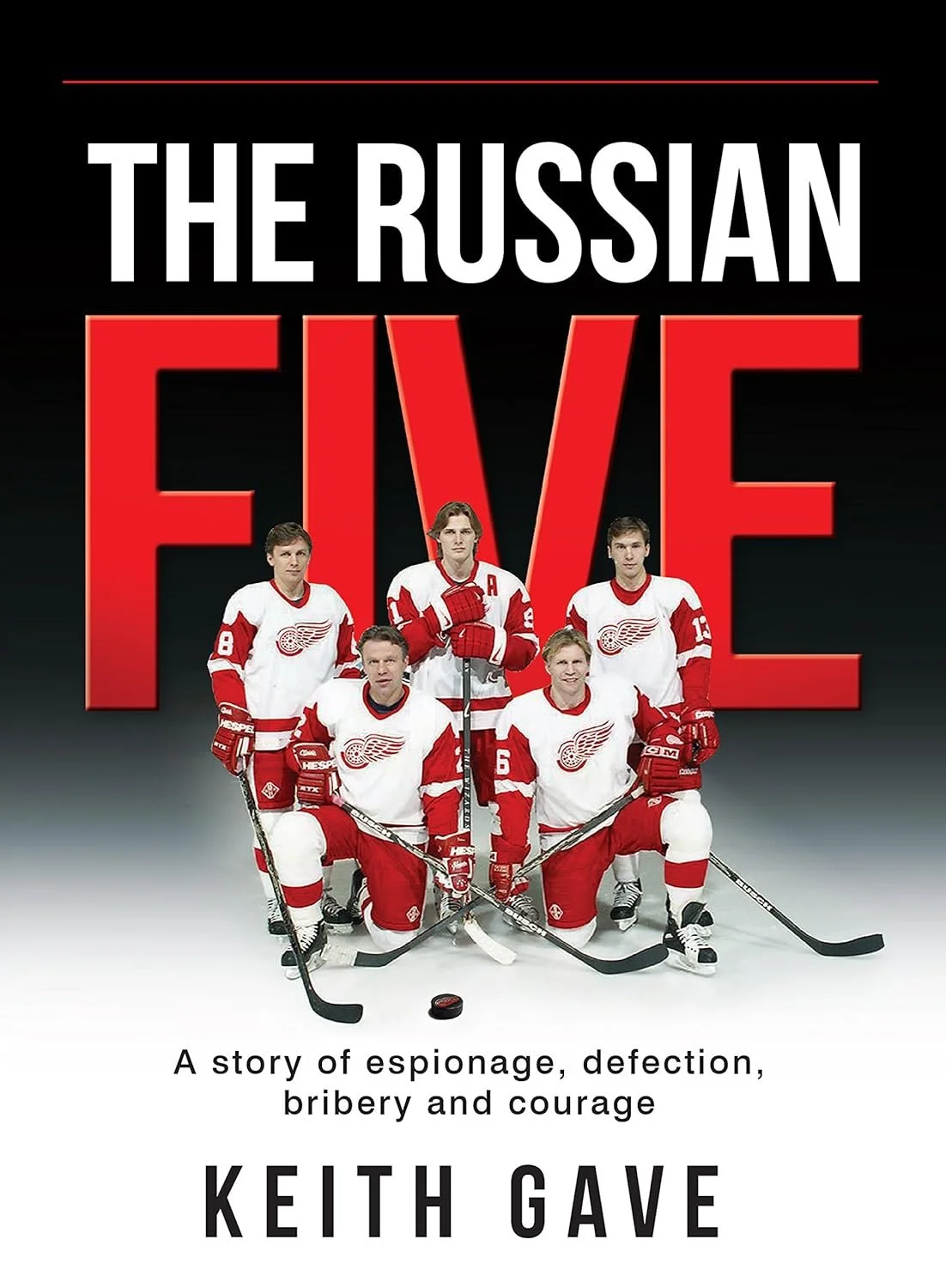
Summary: In this book Keith Gave tells the story of how Sergei Fedorov, Viacheslav Fetisov, Vladimir Konstantinov, Vyacheslav Kozlov and Igor Larionov left the Soviet Union to join the NHL and eventually skate together to form the nucleus of a Red Wings Dynasty under Scotty Bowman. At times, this book reads like spy thriller with secret meetings and bribes to public officials. The insights into various defections of players such as Sergei Federov showcase the risks players, agents, and NHL franchises took to bring talent to North America. The Russian Five brought with them their theory of hockey that the best form of defense was control of the puck, and Red Wings Coach Scotty Bowman carefully chose when to put the Five on the ice to display this type of hockey. The Russian Five would be instrumental in returning Lord Stanley’s Cup to Detroit. The book will make you search on YouTube videos of the Russian Five skating together and making opposing lines look like Squirts on the ice.
Cold War on Ice: The NHL versus the Soviet Union in Hockey’s Greatest Super Series ‘ by John G. Robertson and Carl T. Madden
Best Quote: “Their slowest skater was faster than our fastest skater”
Summary: This is the premier book on the 1976 Super Series when two of the Soviet Union’s premier hockey teams travelled North America to play against NHL teams. Unlike the 1972 Summit Series (and 1974 Summit Series against the WHA) when teams of All-Stars played an 8-game series. Rather, these were individual games where Central Red Army and Wings of the Soviet squared off against eight NHL franchises. In the book, the authors provide a comprehensive breakdown of each game, including Montreal, Philadelphia, Buffalo, Boston, Chicago, Long Island, New York, and Pittsburgh. Two games in particular stand-out, the New Years Eve game pitting Central Red Army against Montreal, and the January 11th game when the same Red Army Team faced the Philadelphia Flyers. The former is widely regarded as one of the greatest hockey games ever played, and resulted in a 3-3 tie, while the latter contrasted the style of the Broad Street Bullies physical play against the finesse of the Soviets. The authors detail how the series represented a true turning point in hockey, and in the NHL. North American teams would truly learn from the Soviets and adapt more of their style of play. Indeed, Scotty Bowman was the head coach of the Canadians, and the 3-3 game would be the trigger for their historic run of 4 consecutive Stanley Cups.